




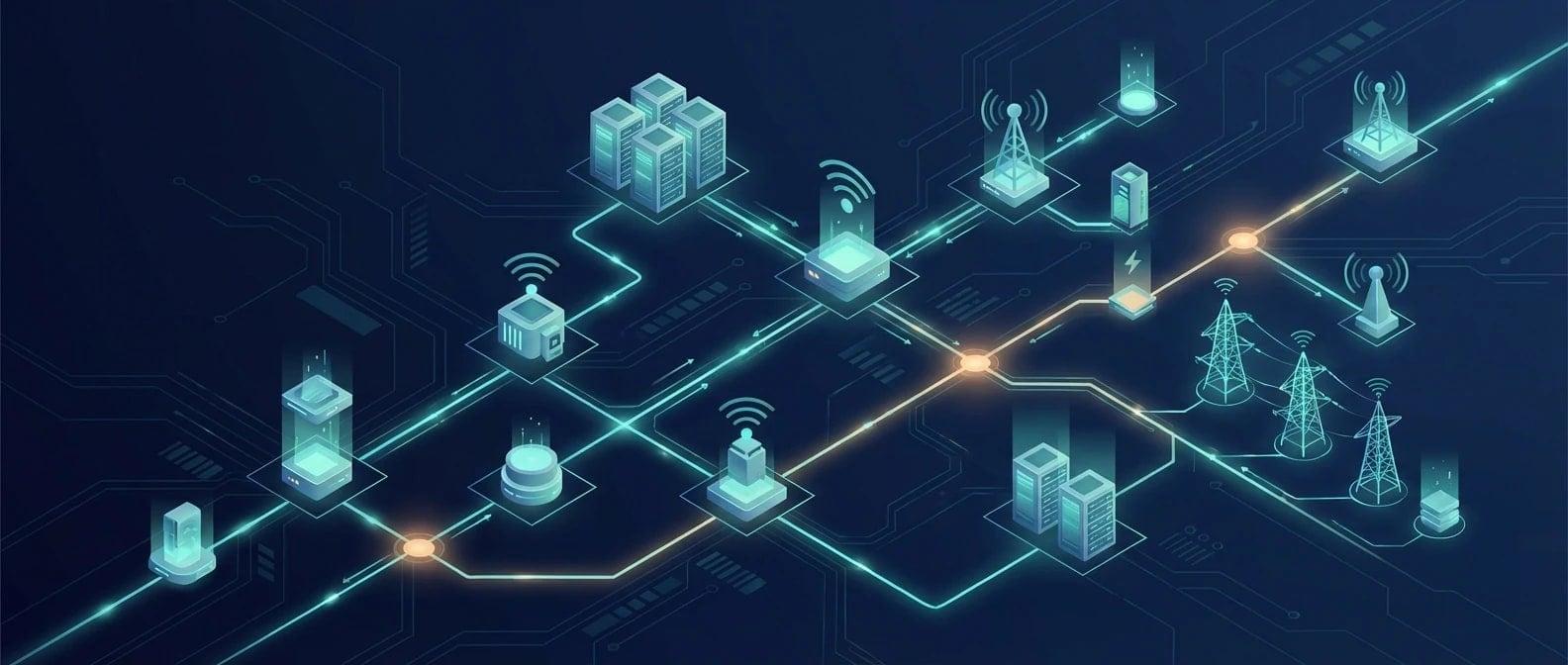
Blockchain technology is expanding beyond digital currencies and decentralized finance. One emerging concept connects blockchain networks with physical infrastructure, including wireless connectivity, data storage, computing power, and environmental sensors.
This concept is known as Decentralized Physical Infrastructure Networks, or DePIN.
Instead of relying exclusively on a single company to build and operate infrastructure, DePIN projects can encourage individuals and businesses to contribute physical resources to a shared network. In return, contributors may receive cryptocurrency tokens or other incentives.
The idea combines blockchain technology, token-based incentives, and real-world services. However, its success depends on more than cryptocurrency prices. Networks must deliver reliable services, attract users, and compete with existing infrastructure providers.
In this guide, we explain what DePIN is, how it works, its major applications, and the opportunities and risks investors and technology enthusiasts should understand.
What Is DePIN in Crypto?
DePIN stands for Decentralized Physical Infrastructure Networks. It describes blockchain-based networks that coordinate the development or operation of physical infrastructure through distributed participation.
Traditional infrastructure is often built and managed by centralized organizations. For example, a telecommunications company may own network equipment, while a cloud provider operates large data centers.
A DePIN project takes a different approach by allowing multiple participants to contribute resources such as wireless hotspots, storage capacity, computing power, or sensor data.
Blockchain technology and token incentives can help coordinate contributions, record activity, and distribute rewards according to a project’s rules.
The exact design varies between projects. Not every DePIN network uses the same blockchain, reward mechanism, or method of verifying contributions.
The main idea is to connect decentralized coordination with useful physical services.
How Does DePIN Work?
Although DePIN projects differ, many share several basic components.
1. Physical Infrastructure
Participants provide hardware or resources that support the network.
Examples include wireless access points, storage devices, computing equipment, mapping devices, and environmental sensors.
The quality and availability of these resources directly affect the usefulness of the network.
2. Blockchain Technology
A blockchain can record transactions, coordinate token distributions, and support transparent rules for participating in a network.
Some projects use smart contracts to automate parts of their reward systems or governance processes.
However, blockchain does not automatically verify that every physical resource is functioning correctly. Projects may need additional verification systems, measurements, or independent checks.
3. Token Incentives
Some DePIN networks reward participants with cryptocurrency tokens for providing resources or completing verified tasks.
These incentives are intended to encourage people to contribute infrastructure that benefits the network.
Nevertheless, token rewards alone do not guarantee long-term success. A sustainable project needs real demand for its services and a sensible economic model.
4. Users and Real-World Demand
A decentralized infrastructure network needs customers or applications that actually use its services.
For example, a storage network needs users who want to store data, while a wireless network needs people or organizations that benefit from its connectivity.
Real demand can help support the network beyond speculative interest in its token.
In simple terms, DePIN combines physical resources, decentralized coordination, participant incentives, and real-world users.
Major Types of DePIN Projects
DePIN covers several infrastructure categories. Understanding these categories makes it easier to see how blockchain networks can interact with the physical world.
1. Decentralized Wireless Networks
Some projects allow participants to deploy wireless equipment and contribute connectivity to a distributed network.
Depending on the technology, this may involve hotspots, gateways, or other networking devices.
The objective is to expand access to connectivity through distributed infrastructure rather than relying entirely on a single operator.
The practical value depends on coverage, connection quality, device compatibility, and demand from users.
2. Decentralized Cloud Storage
Storage-focused DePIN projects allow participants to contribute unused disk space or other storage resources.
These networks aim to provide alternatives or complements to conventional cloud storage services.
Potential advantages include distributed resource availability and alternative pricing models. However, users must also consider data privacy, redundancy, retrieval speed, reliability, and the economic sustainability of storage providers.
3. Decentralized Computing Power
Computing-focused networks connect people or organizations that have available computing resources with users who need processing capacity.
Possible applications include rendering, scientific workloads, data processing, and certain machine-learning tasks.
The network must coordinate resource availability, performance requirements, pricing, and verification of completed work.
Not every distributed computing project is suitable for every workload, especially when applications require predictable performance or strict security guarantees.
4. Mapping and Location Data
Some decentralized networks encourage participants to collect and contribute mapping or location-related information.
These resources can support navigation, transportation, logistics, and location-based applications.
The usefulness of the resulting data depends on its accuracy, freshness, geographic coverage, and the ability to verify contributions.
5. Environmental and Sensor Networks
Sensor-based projects can collect information about weather, air quality, energy usage, or other physical conditions.
Distributed participants may operate sensors that contribute data to a shared system.
Potential applications include environmental monitoring, research, and operational planning. Data quality and independent verification remain essential.
Examples of DePIN Crypto Projects
Several projects illustrate different approaches to decentralized infrastructure. These examples are provided for educational purposes, not as investment recommendations.
Helium
Helium is associated with decentralized wireless infrastructure. Its ecosystem has included community-operated hotspots and wireless connectivity initiatives.
The project illustrates how a network can encourage participants to contribute physical networking equipment.
Official website: https://www.helium.com/
Filecoin
Filecoin is a decentralized storage network designed to connect storage providers with users who need data storage.
Its model demonstrates how distributed storage resources can be coordinated through blockchain-based mechanisms and economic incentives.
Official website: https://filecoin.io/
Render
Render is associated with distributed GPU rendering and computing resources. Its network aims to connect users who need graphics processing capacity with providers who can contribute suitable hardware.
It illustrates how decentralized resource networks can target specialized computing workloads.
Official website: https://rendernetwork.com/
These projects operate in different infrastructure categories and should not be assumed to have identical technology, economics, or risks. Their features, token arrangements, and network activity can change over time.
What Are the Benefits of DePIN?
DePIN can offer several potential advantages when a network is well designed and serves a genuine need.
Lower Barriers to Participation
Some networks allow individuals or smaller organizations to contribute resources without building an entire infrastructure business from scratch.
The actual cost of participation depends on equipment requirements, electricity, maintenance, connectivity, and other expenses.
Distributed Infrastructure
Resources can be provided by participants in different locations. This may help a network expand geographically or diversify its infrastructure.
However, decentralization does not automatically guarantee better reliability or performance.
Incentivized Resource Sharing
Token-based rewards may encourage people to make underused resources available to others.
For example, a participant might contribute storage capacity or computing power that would otherwise remain idle.
Potentially New Business Models
DePIN can create alternative ways to organize infrastructure services by connecting resource providers directly with network users.
Whether these models become competitive depends on service quality, operating costs, user demand, and the project’s economic structure.
What Are the Risks of DePIN?
Despite its potential, DePIN faces several technical, economic, and operational challenges.
Token Price Volatility
Some projects use cryptocurrency tokens to reward contributors. If token prices fall significantly, participation may become less attractive, especially when hardware and electricity costs remain high.
A network should not be evaluated solely by the value of its token.
Uncertain Demand
A project may attract hardware operators and distribute rewards without generating enough demand for its underlying services.
Long-term sustainability requires useful infrastructure and customers willing to pay for it.
Hardware and Maintenance Costs
Running physical equipment can involve upfront purchases, electricity, repairs, internet access, and ongoing maintenance.
Potential rewards should be evaluated against these expenses rather than treated as guaranteed profit.
Technical and Security Risks
DePIN systems may face software vulnerabilities, compromised devices, unreliable infrastructure, inaccurate data, and smart contract exploits.
Projects need appropriate monitoring, verification, security controls, and recovery procedures.
Regulatory Uncertainty
The legal treatment of cryptocurrency tokens, rewards, data collection, and infrastructure services varies by jurisdiction.
Participants and businesses should understand the rules that apply to their activities.
DePIN vs. Traditional Infrastructure
DePIN and traditional infrastructure can serve similar purposes, but they organize resources differently.
| Feature | DePIN Networks | Traditional Infrastructure |
|---|---|---|
| Resource ownership | May be distributed among participants | Often concentrated in a company or organization |
| Coordination | Blockchain, software, and network protocols may be used | Centralized management is common |
| Incentives | May include cryptocurrency tokens or service payments | Commonly based on employment, contracts, or commercial revenue |
| Expansion | May rely on distributed participant contributions | Often requires direct capital investment |
| Accountability | Depends on protocol design and participating entities | Often follows established corporate and regulatory structures |
| Main challenge | Coordinating reliable resources and sustainable incentives | Capital costs, operational efficiency, and market competition |
These are general differences, not universal rules. Some traditional networks are highly distributed, and some DePIN projects depend on centralized companies or service providers.
The most effective model depends on the infrastructure being delivered and the needs of its users.
How to Evaluate a DePIN Project
Before participating in a DePIN network or purchasing its token, examine the underlying project carefully.
1. Real-world utility: What specific problem does the project solve, and who uses the service?
2. Actual demand: Is there evidence of meaningful usage beyond token incentives and promotional activity?
3. Token economics: How are rewards funded, and how do token issuance, demand, and operating expenses affect sustainability?
4. Infrastructure quality: Does the network deliver reliable, measurable services?
5. Team and transparency: Is there clear technical documentation, public development activity, and information about project governance?
6. Costs and profitability: If operating hardware, calculate equipment, electricity, maintenance, and other expenses. Do not assume advertised rewards equal net profit.
7. Security and regulation: Understand the project’s security model, data practices, legal considerations, and potential risks.
These checks can help distinguish a useful infrastructure project from one that relies mainly on speculative expectations.
What Is the Future of DePIN?
The future of DePIN will depend on whether decentralized networks can provide reliable services at competitive prices.
Potential areas of development include wireless connectivity, distributed storage, computing resources, mapping, and environmental data collection.
Some projects may find opportunities in locations or specialized markets where conventional infrastructure is expensive or difficult to deploy. Others may compete with established providers that already benefit from mature technology and economies of scale.
Interoperability, better verification systems, improved hardware efficiency, and sustainable reward mechanisms could influence the sector’s development.
However, growth is not guaranteed. Some projects may fail to attract sufficient customers, while others may struggle with operational complexity or token economics.
Ultimately, the strongest DePIN networks will need to demonstrate practical value, dependable performance, and a sustainable way to compensate participants.
Conclusion
Decentralized Physical Infrastructure Networks represent an interesting development in the cryptocurrency and blockchain ecosystem.
By combining physical resources, distributed coordination, and economic incentives, DePIN projects aim to create alternative models for providing services such as wireless connectivity, storage, computing, and data collection.
These networks offer potential benefits, including broader participation and new infrastructure business models. At the same time, they face important challenges involving security, hardware costs, token volatility, regulation, and real-world demand.
For anyone exploring DePIN, the most important question is not simply whether a project has a cryptocurrency token. It is whether the network solves a genuine problem and can deliver a reliable service over time.
Understanding the technology and its limitations is a more useful starting point than relying on price predictions or promises of passive income.
Frequently Asked Questions
What does DePIN stand for in crypto?
DePIN stands for Decentralized Physical Infrastructure Networks. It describes networks that coordinate physical infrastructure using decentralized technologies and, in some cases, cryptocurrency incentives.
How do DePIN projects make money?
Depending on the project, revenue may come from customers paying for storage, connectivity, computing resources, or other services. Token rewards are not necessarily revenue, and their value may fluctuate.
Is DePIN the same as DeFi?
No. DeFi, or decentralized finance, focuses on financial services built using blockchain technology. DePIN focuses on coordinating physical infrastructure and related services, although the two sectors can overlap.
Can you earn cryptocurrency with DePIN?
Some projects reward eligible participants for contributing hardware, resources, or verified services. Earnings are not guaranteed and may be offset by equipment, electricity, maintenance, and other costs.
Is DePIN a good investment?
There is no universal answer. DePIN tokens can be highly volatile, and projects differ significantly in adoption, utility, token economics, and risk. Research each project independently and never assume that network growth guarantees token price appreciation.
Why is DePIN important for Web3?
DePIN explores ways to extend decentralized coordination beyond purely digital applications into physical infrastructure. Its long-term importance will depend on whether these networks provide useful, reliable, and economically sustainable services.