



The world of finance is undergoing a digital transformation, and one of the most exciting innovations is asset tokenization. While cryptocurrencies like Bitcoin and Ethereum have introduced millions of people to blockchain technology, tokenization is expanding its use far beyond digital currencies.
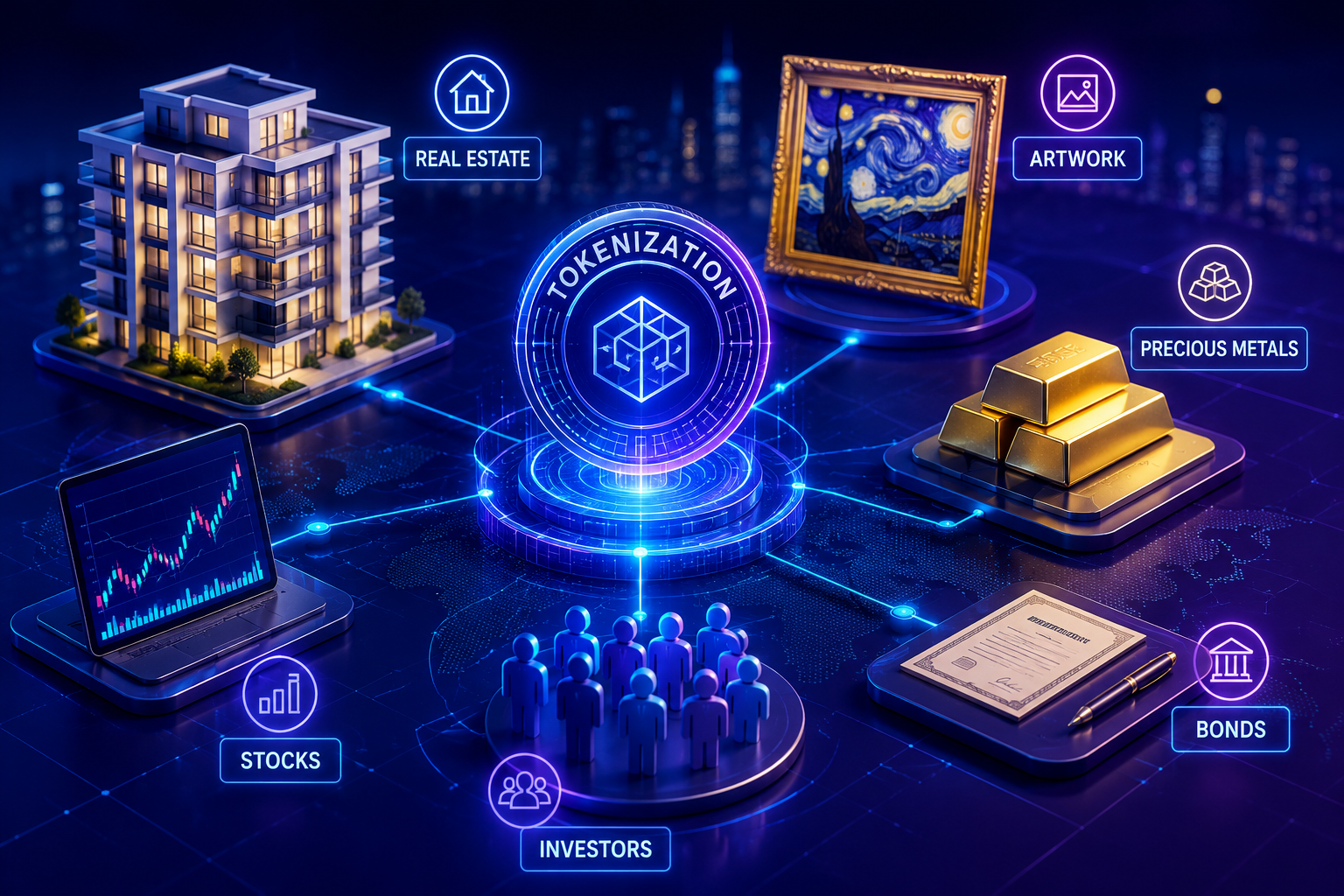
From real estate and artwork to stocks and precious metals, real-world assets can now be represented as digital tokens on a blockchain. This innovation has the potential to make investing more accessible, transparent, and efficient than ever before.
In this article, we’ll explore what tokenization is, how it works, and why many experts believe it could reshape the future of investing.
What Is Tokenization?
Tokenization is the process of converting ownership rights of a real-world asset into a digital token that exists on a blockchain.
Each token represents a portion or all of an asset’s value. These tokens can be bought, sold, or transferred securely using blockchain technology.
Assets that can be tokenized include:
- Real estate
- Gold and precious metals
- Company shares
- Artwork
- Collectibles
- Intellectual property
- Government bonds
Instead of handling paperwork and multiple intermediaries, ownership can be recorded digitally on a decentralized network.
How Does Asset Tokenization Work?
The process generally follows these steps:
1. Asset Selection
A physical or financial asset is chosen for tokenization.
2. Digital Representation
Ownership rights are converted into blockchain-based digital tokens.
3. Smart Contracts
Smart contracts automate transactions, ownership transfers, and compliance requirements.
4. Trading
Investors can buy or sell tokens through approved digital marketplaces.
The blockchain records every transaction transparently and securely.
Benefits of Tokenization
Increased Accessibility
Traditionally, investing in expensive assets like commercial real estate required significant capital.
With tokenization, investors can purchase small fractions of high-value assets, lowering the barrier to entry.
Greater Liquidity
Many traditional assets are difficult to sell quickly.
Tokenized assets can potentially be traded more efficiently, improving market liquidity.
Enhanced Transparency
Blockchain records every ownership transfer permanently.
This transparency helps reduce fraud and improves trust between buyers and sellers.
Lower Costs
Tokenization reduces the need for intermediaries such as brokers, registrars, and clearing houses.
This can lower transaction costs while increasing efficiency.
Global Investment Opportunities
Because blockchain operates globally, investors from different countries may gain easier access to international investment opportunities, subject to local regulations.
Real-World Examples
Several industries are already exploring tokenization.
Real Estate
Properties can be divided into thousands of digital shares, allowing multiple investors to own portions of a building.
Precious Metals
Gold-backed digital tokens allow investors to gain exposure to physical gold without storing it themselves.
Art and Collectibles
Rare paintings and collectibles can be fractionally owned through blockchain tokens.
Financial Markets
Some financial institutions are experimenting with tokenized bonds and securities to streamline settlements.
Challenges of Tokenization
Despite its potential, tokenization faces several challenges.
Regulatory Uncertainty
Laws governing digital assets differ across countries and continue to evolve.
Technology Adoption
Many investors and institutions are still learning how blockchain systems work.
Security Risks
Although blockchain is highly secure, wallets, exchanges, and smart contracts must also be protected against cyber threats.
Market Acceptance
Widespread adoption will depend on trust, infrastructure, and clear legal frameworks.
The Future of Tokenized Assets
Industry experts believe tokenization could become one of blockchain’s most important applications.
Future possibilities include:
- Fractional ownership of almost any valuable asset
- Faster global investment transactions
- More efficient financial markets
- Increased financial inclusion
- Simplified cross-border investing
As blockchain technology matures, tokenization may become a standard way of buying, selling, and managing assets.
Final Thoughts
Asset tokenization is transforming how ownership is recorded and transferred. By bringing real-world assets onto blockchain networks, it has the potential to make investing more accessible, transparent, and efficient.
Although regulatory and technical challenges remain, tokenization represents an important step toward the future of digital finance. As adoption grows, both individual investors and institutions may benefit from a more connected and flexible financial ecosystem.