




Stress is a normal part of life. Whether it’s caused by work, finances, relationships, or unexpected challenges, everyone experiences stress from time to time. In small amounts, stress can help you stay alert and respond to difficult situations. However, chronic stress can have serious effects on both your physical and mental health.
Learning to recognize the warning signs of stress is the first step toward protecting your well-being. In this article, we’ll explore how stress affects your body and the symptoms you should never ignore.
What Happens to Your Body During Stress?
When you experience stress, your body activates its “fight-or-flight” response. This natural reaction releases hormones such as adrenaline and cortisol, preparing you to deal with a perceived threat.
In the short term, this response can be helpful by increasing your energy and focus. But when stress becomes constant, these hormones remain elevated, which can negatively affect many systems in the body.
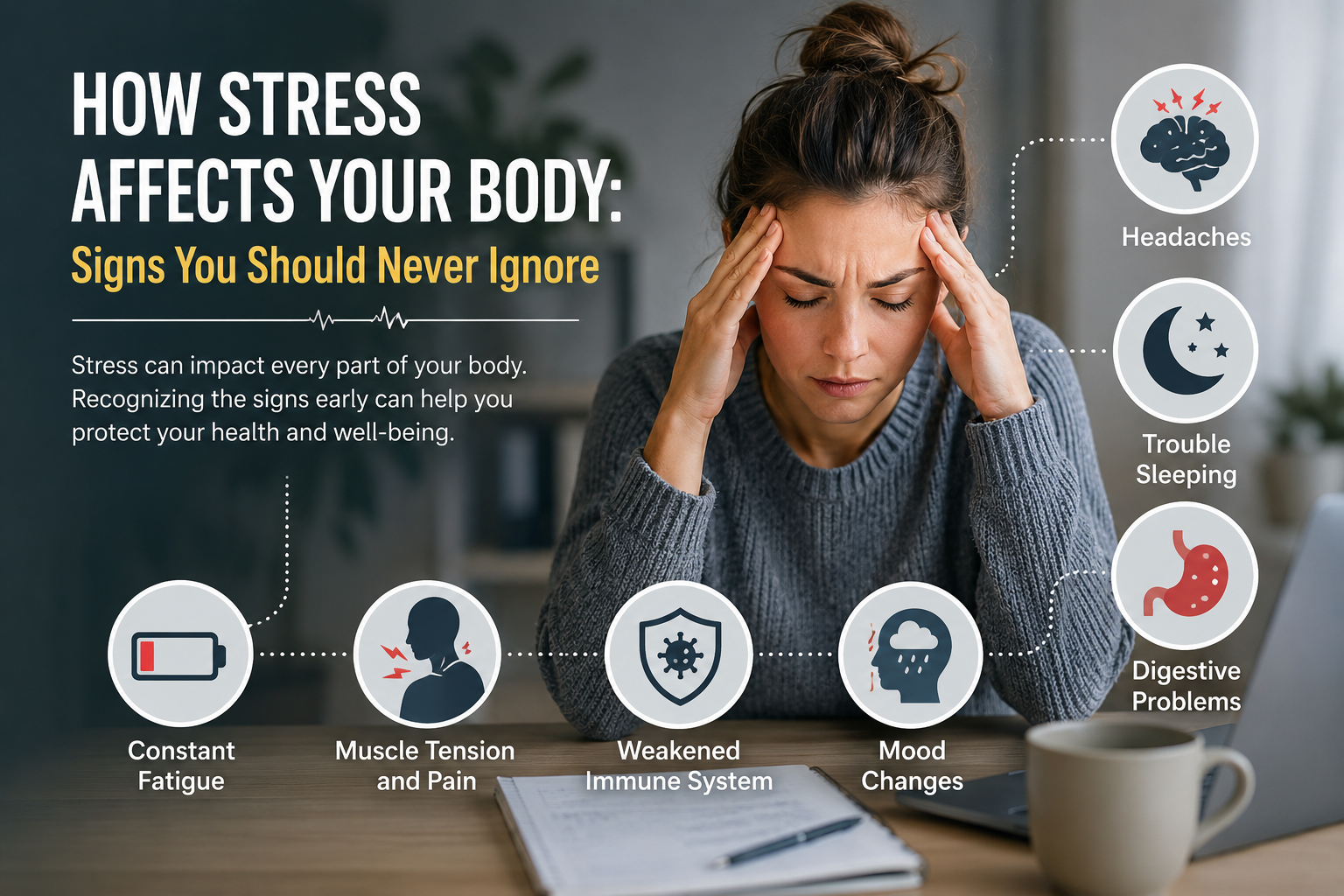
1. Frequent Headaches
One of the most common signs of ongoing stress is frequent headaches.
Stress can cause muscle tension around the neck, shoulders, and scalp, leading to tension headaches. In some people, it may also trigger migraines.
If headaches become more frequent during stressful periods, your body may be signaling that it needs rest and stress management.
2. Trouble Sleeping
Stress often makes it difficult to fall asleep or stay asleep.
Common sleep-related symptoms include:
- Difficulty falling asleep
- Waking up during the night
- Feeling tired after sleeping
- Vivid or stressful dreams
Poor sleep can increase stress levels even further, creating a difficult cycle to break.
3. Digestive Problems
The digestive system is closely connected to the brain.
Long-term stress may contribute to:
- Stomach pain
- Bloating
- Indigestion
- Changes in appetite
- Diarrhea or constipation
These symptoms are often temporary but should not be ignored if they become persistent.
4. Constant Fatigue
Feeling tired after a busy day is normal, but ongoing stress can leave you feeling exhausted even after a full night’s sleep.
Stress forces your body to stay in a constant state of alertness, using more energy than usual.
This can lead to:
- Low energy
- Lack of motivation
- Difficulty concentrating
5. Muscle Tension and Pain
Many people unconsciously tighten their muscles when they feel stressed.
This may cause:
- Neck pain
- Shoulder stiffness
- Back pain
- Jaw tension
Gentle stretching, regular movement, and relaxation techniques may help reduce muscle tension.
6. Weakened Immune System
Long-term stress can affect how well your immune system works.
You may notice:
- Frequent colds
- Slower recovery from illness
- Feeling run down more often
Managing stress is an important part of supporting overall immune health.
7. Mood Changes
Stress doesn’t only affect the body—it also impacts emotions.
Common emotional signs include:
- Irritability
- Anxiety
- Feeling overwhelmed
- Difficulty relaxing
- Loss of motivation
Recognizing these changes early can help prevent stress from becoming more serious.
How to Manage Stress in a Healthy Way
Although stress cannot always be avoided, healthy habits can help you manage it more effectively.
Consider these strategies:
- Exercise regularly
- Get 7–9 hours of sleep each night
- Practice deep breathing or meditation
- Spend time outdoors
- Limit excessive caffeine and alcohol
- Stay connected with supportive friends and family
- Take regular breaks from work and digital devices
Small lifestyle changes can make a significant difference over time.
When Should You Seek Professional Help?
If stress begins to interfere with your daily life, relationships, work, or physical health for an extended period, it may be time to seek support from a qualified healthcare professional or mental health specialist.
Getting help early can prevent stress from developing into more serious health problems.
Final Thoughts
Stress is a natural part of life, but it should never be ignored when it becomes chronic. Your body often provides early warning signs, from headaches and fatigue to digestive problems and mood changes.
By recognizing these symptoms and adopting healthy stress-management habits, you can protect both your physical and mental well-being. Remember, taking care of your health today can help you build a healthier and more balanced future.